Invited plenary speakers
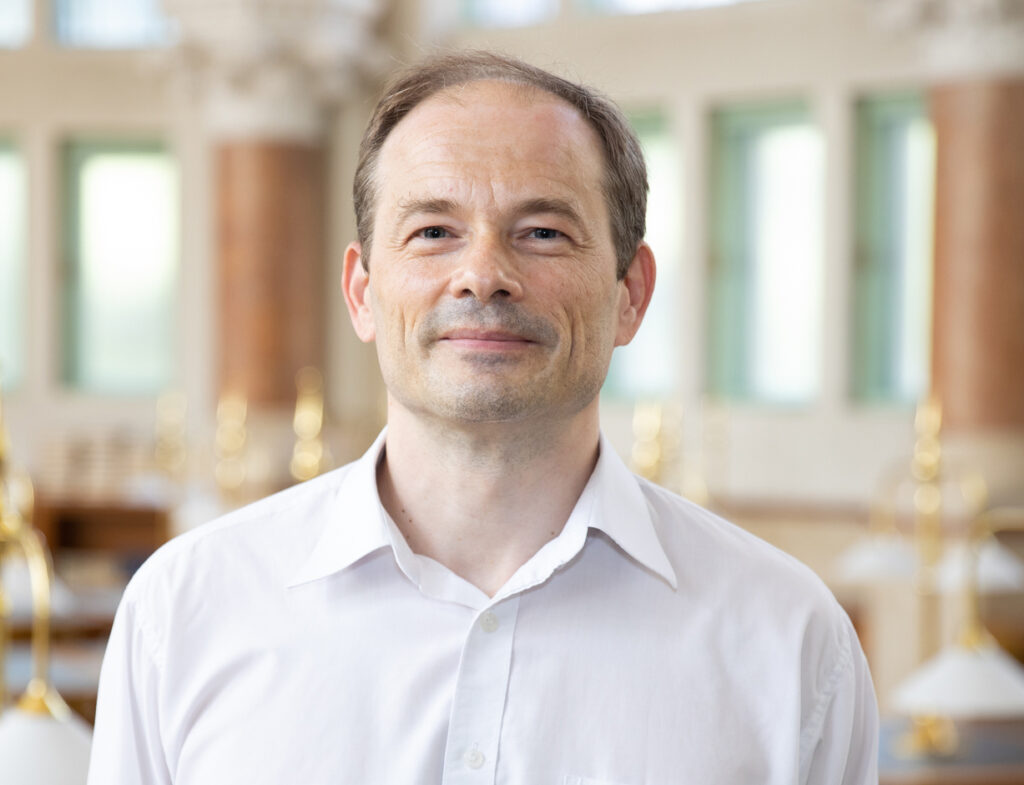
Peter Schoenmakers has been a full-time professor in Analytical Chemistry (including its applications in forensic science) at the University of Amsterdam since 2002. His research focuses on analytical separations in general and on multi-dimensional liquid chromatography in particular.
Peter Schoenmakers is also the Education Director of COAST, The Netherlands’ public-private-partnership organization on analytical chemistry. In 2016 he was awarded an ERC Advanced grant for the project STAMP (Separation Technology for A Million Peaks). Recent international awards include the Dal Nogare Award (2019). The Fritz-Pregl Medal (2018), the CASSS Award (2015), the Csaba Horváth Memorial Award (2015), the John H. Knox Medal of the RSC (2014), the Martin medal of the Chromatographic Society (2011), and the EAS Award for Excellence in Separation Science (2010).
https://cast-amsterdam.org/
Keynote topic: Separation Science in the age of artificial intelligence
Prof. Dr. Aleš Růžička, Ph.D., is employed at the Department of General and Inorganic Chemistry, the Faculty of Chemical Technology of the University of Pardubice. From the beginning of his studies he was a member of the research group of Prof. J. Holeček (since 1993). Since 1999 he has been employed as a researcher. In 2001, he completed his doctoral studies and began an independent scientific career. In 2003, he undertook a postdoctoral fellowship at the Royal Society/NATO fellowship with Prof. Michael F. Lappert at Sussex University in Brighton, UK. In the following years he made short-term stays and lectured at foreign universities. In 2005 he became Associate Professor and in 2011 he was appointed Professor in Inorganic Chemistry.
He is a member of the editorial boards of Applied Organometallic Chemistry, Main Group Metal Chemistry, Journal of Organometallic Chemistry and Crystals, Chairman of the Organizing Committee of the International Conference on Organometallic Chemistry, Chairman and member of several subject advisory and scientific boards and member of the Learned Society of the Czech Republic.
Keynote topic: Polyhedral Heteroboranes; from 3D aromatics to cations or superbases
Erwin Reisner is the Professor of Energy and Sustainability in the Yusuf Hamied Department of Chemistry at the University of Cambridge, where he also holds a Royal Academy of Engineering Chair in Emerging Technologies. He is also a Fellow of St. John’s College, Cambridge. He is an expert in renewable energy technologies and sustainable chemistry, in particular the sunlight-powered production of sustainable fuels and platform chemicals. His cross-disciplinary research into solar chemistry and circular chemical technologies focuses on the capture and utilisation of the greenhouse gas carbon dioxide as well as the valorisation of plastics and biomass waste to produce green fuels and chemicals for a net zero future.
Erwin’s laboratory on solar chemical technologies has been supported by several fellowships and grants such as an EPSRC Career Acceleration Fellowship on bio-inspired solar hydrogen production (2009-2015), the Christian Doppler Laboratory for Sustainable SynGas Chemistry (2012-2019), a European Research Council (ERC) Consolidator Grant on semi-artificial photosynthesis (2016-2023), an ERC/UKRI Advanced Grant on semi-biological domino catalysis (2023-2028) and a Royal Academy of Engineering Chair for tech-transfer of solar reforming (2024-2034). He has received several awards and recognitions for his team's scientific achievements, such as the Hughes Medal by the Royal Society (2023), the Tilden Prize by the Royal Society of Chemistry (2024) and being named as ClarivateTM Highly Cited Researcher (2024).
http://www-reisner.ch.cam.ac.uk/
Keynote topic: Solar Chemical Technologies
Karsten Haupt is a Biochemist from the University of Leipzig. After obtaining a PhD from Université de Technologie de Compiègne (UTC), he was a researcher at Lund University, Sweden, at INSERM, Paris, and at University of Paris 12. Since 2003 he has been a full professor of Bioengineering at UTC, and since 2012 the Head of the CNRS Laboratory for Enzyme and Cell Engineering. He is a Senior Member of Institut Universitaire de France. His main research interests include affinity technology, chemical sensors, synthetic antibodies, and nanomaterials for biomedicine.
Relevant publication: K. Haupt, P.X. Medina Rangel, B. Tse Sum Bui (2020) Molecularly Imprinted Polymers: Antibody Mimics for Bioimaging and Therapy. Chem. Rev. 120, 9554-9582.
Keynote topic: Molecularly Imprinted Polymer Nanogels: Synthetic Antibodies for Diagnostics and Therapy
Harald Pflanzl is a senior executive with 30+ years of international leadership experience in various industries across Europe, Africa, the Middle East, Central Asia, and Latin America. He held multiple Senior Vice President and Managing Director roles at BASF, leading operations in up to 80 countries, with P&L responsibility, business transformation, growth, restructuring, M&A, and stakeholder management and has a proven track record in strategy execution, organizational development, and leading multicultural teams.
Shaping the future – In an increasingly complex and uncertain world, optimism, collaboration, openness, and transparency are essential to drive innovation, growth, and progress.
Keynote topic: Shaping the Future – Without Chemistry and Chemists, There Is No Future